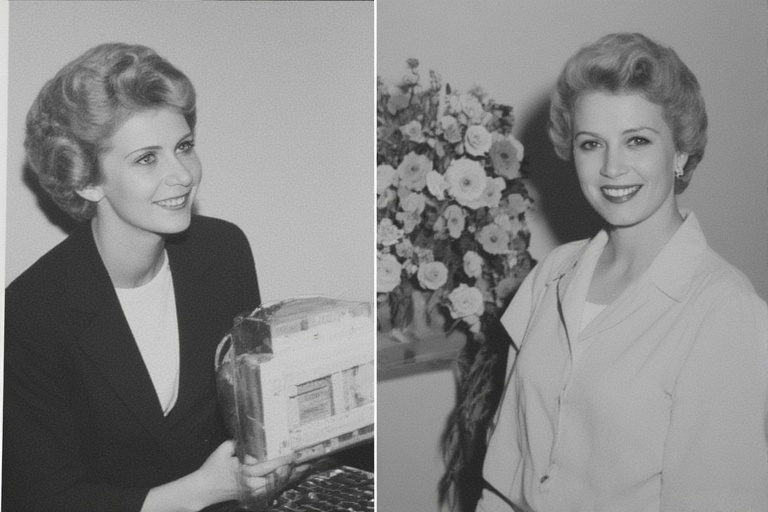
Marilyn Kroc Barg
Introduction
Marilyn Kroc Barg lived a life marked by quiet generosity and personal passions, far removed from the bustling empire her father built. As the sole child of Ray Kroc, the visionary who transformed McDonald’s into a global phenomenon, Marilyn could have embraced the spotlight. Instead, she forged her own path, dedicating herself to philanthropy, equestrian pursuits, and simple joys. Though her time was cut short, her enduring influence reminds us that true impact often comes from behind the scenes. Join us as we explore her journey, from humble beginnings to a legacy of kindness.
Early Life and Family Background
Born Marilyn Janet Kroc on October 15, 1924, in Chicago, Illinois, she was affectionately known as “Lynn” to family and friends. She entered the world as the only offspring of Ray Kroc and his first wife, Ethel Janet Fleming, who had wed just two years prior in 1922. In those early days, Ray was far from the fast-food magnate he would become; he hustled as a salesman peddling paper cups and multi-mixers, while also dabbling in music as a pianist and radio personality. The Kroc family, with roots tracing back to Czech immigrants from Bohemia, navigated modest circumstances with resilience.
Marilyn’s childhood
Marilyn’s childhood unfolded against the backdrop of Chicago’s vibrant yet challenging era. By the time Ray encountered the McDonald brothers in 1954 and launched the first McDonald’s franchise in Des Plaines, Illinois, Marilyn was already in her late twenties. She witnessed her father’s relentless ambition propel the company from a single location to a nationwide chain. For those curious about Ray Kroc’s family, yes, he had just one child—Marilyn—from his marriage to Ethel, which ended in divorce in 1961 after nearly four decades. Ray remarried twice more, but Marilyn remained a constant in his life, embodying the family’s grounded values.
Childhood Memories and Education
Childhood Memories and Education Growing up in the 1920s and 1930s, Marilyn experienced a relatively ordinary upbringing despite the future fame tied to her surname. Chicago buzzed with cultural energy—jazz clubs, industrial growth, and everyday hustle—that likely shaped her worldview. While specifics of her schooling remain private, it’s evident she attended local institutions, absorbing lessons in perseverance from her parents’ example.
With Ray frequently traveling for sales gigs, Ethel took the lead in raising Marilyn, instilling in her a sense of empathy and independence. These formative years built a foundation of compassion that would define Marilyn’s later endeavors. Far from the glitz of business success, her early life emphasized family bonds and the importance of supporting one another through life’s uncertainties.
Marriages and Personal Life
Marilyn’s romantic life reflected her search for stability amid personal transitions. She first married Sylvester Nordly Nelson in 1949, a union that lasted roughly 11 years before dissolving in divorce in 1960. Details of this period are scarce, as Marilyn valued her privacy above all.
Undeterred, she soon found companionship with James W. Barg, whom she married in 1960 in her hometown of Chicago. The couple settled in Arlington Heights, Illinois, where they built a supportive partnership that endured until her passing. Though they had no children, their bond provided Marilyn with a sense of home. James, who passed away in 1984, shared her low-key lifestyle.
Beyond matrimony, Marilyn’s passions shone through her love of horses. An avid equestrian, she found solace in riding and competing, often spending time at stables tending to animals. This hobby highlighted her nurturing nature—patient, dedicated, and far from the corporate world her father dominated. When people inquire about Ray Kroc’s daughter, Marilyn emerges not just as an heir but as a woman who prioritized meaningful connections over public acclaim.
Philanthropy and Contributions to Society
Marilyn Kroc Barg’s true shine came through her philanthropic spirit, channeling her family’s resources into causes close to her heart. Battling diabetes herself, she actively supported research and awareness for the condition, donating to medical initiatives that aimed to improve lives. Her giving extended to community efforts in Illinois, including food assistance programs and local events that fostered togetherness.
A devoted animal lover, Marilyn backed horse rescue operations and veterinary care, reflecting her equestrian enthusiasm. Her influence lingered in the Kroc family’s charitable foundations, which Ray established. Notably, the Ronald McDonald House Charities, launched in 1974 shortly after her death, provides lodging for families of ill children near hospitals—a mission echoing Marilyn’s empathy for families in need.
In her neighborhoods—from Evanston to Arlington Heights—Marilyn was remembered as approachable and genuine, not as a celebrity offspring. Her estimated net worth at death, around $1 million according to several accounts, was directed toward benevolent purposes rather than personal extravagance. She exemplified how privilege could be wielded for quiet, impactful change.
Challenges and Health Struggles Despite her positive outlook, Marilyn faced significant hurdles, particularly with her health. Diagnosed with diabetes—a condition less manageable in the mid-20th century—she managed it with determination but ultimately succumbed to its complications on September 11, 1973, at the age of 48. Her burial at Memorial Park Cemetery in Skokie, Illinois, marked a poignant end to a life full of potential.
This loss deeply affected Ray Kroc, who outlived her until 1984 and often spoke of her in his memoir, “Grinding It Out.” Marilyn also navigated her parents’ divorce and the pressures of a famous lineage with grace, never publicly lamenting her circumstances. Her story underscores the universal struggles even prominent families endure, teaching lessons in fortitude.
Legacy in the McDonald’s Story
Legacy in the McDonald’s Story While McDonald’s exploded under Ray Kroc’s guidance—acquired fully in 1961 for $2.7 million and expanding to thousands of outlets by the 1970s—Marilyn remained detached from operations. She avoided boardrooms and deals, letting her father’s drive take center stage. Yet, her presence motivated Ray’s later focus on philanthropy, possibly as a tribute to her compassionate ways.
Today, searches for “Ray Kroc daughter net worth” yield estimates, but Marilyn’s real value lies in her intangible contributions. She humanized the McDonald’s narrative, showing that behind the brand’s success was a family grounded in care and community.
Fun Facts and Lesser-Known Details
- Marilyn’s nickname “Lynn” derived from her middle name, Janet, adding a personal touch to her identity.
- She was present for the inaugural McDonald’s opening in 1955, a milestone in her father’s career.
- As an equestrian, she may have earned local recognitions, though documentation is limited.
- Her second husband, James, pursued business interests while championing her hobbies.
- Elements of her life subtly appear in depictions of Ray Kroc, such as the 2016 film “The Founder,” though she’s not central.
FAQ
Who was Marilyn Kroc Barg?
Marilyn Kroc Barg was the daughter of McDonald’s founder Ray Kroc, known for her philanthropy, love of horses, and private demeanor. Born in 1924, she passed away in 1973.
Did Ray Kroc have children?
Yes, Ray Kroc had one child, Marilyn Kroc Barg, from his first marriage to Ethel Fleming.
What was Marilyn Kroc Barg’s net worth?
At her death in 1973, Marilyn’s net worth was estimated at approximately $1 million, though figures vary in some reports.
How did Marilyn Kroc die?
Marilyn died on September 11, 1973, from diabetes-related complications at age 48.
Was Marilyn Kroc involved in McDonald’s?
No, she did not participate in the business aspects of McDonald’s, preferring to focus on personal and charitable pursuits.
Conclusion
Marilyn Kroc Barg’s brief but profound existence teaches us that legacy isn’t measured by headlines or fortunes, but by the warmth we extend to others. As Ray Kroc’s only daughter, she could have pursued glamour, yet she opted for humility, aiding causes from health research to animal welfare. Her Chicago origins and steadfast spirit continue to inspire, proving that even in the shadow of an empire, one person’s kindness can ripple far. Though she left us early, the Kroc family’s ongoing good works keep her memory alive.
You May Also Like : Introduction to Cecily Capaldi: A Life in the Spotlight’s Gentle Shadow

